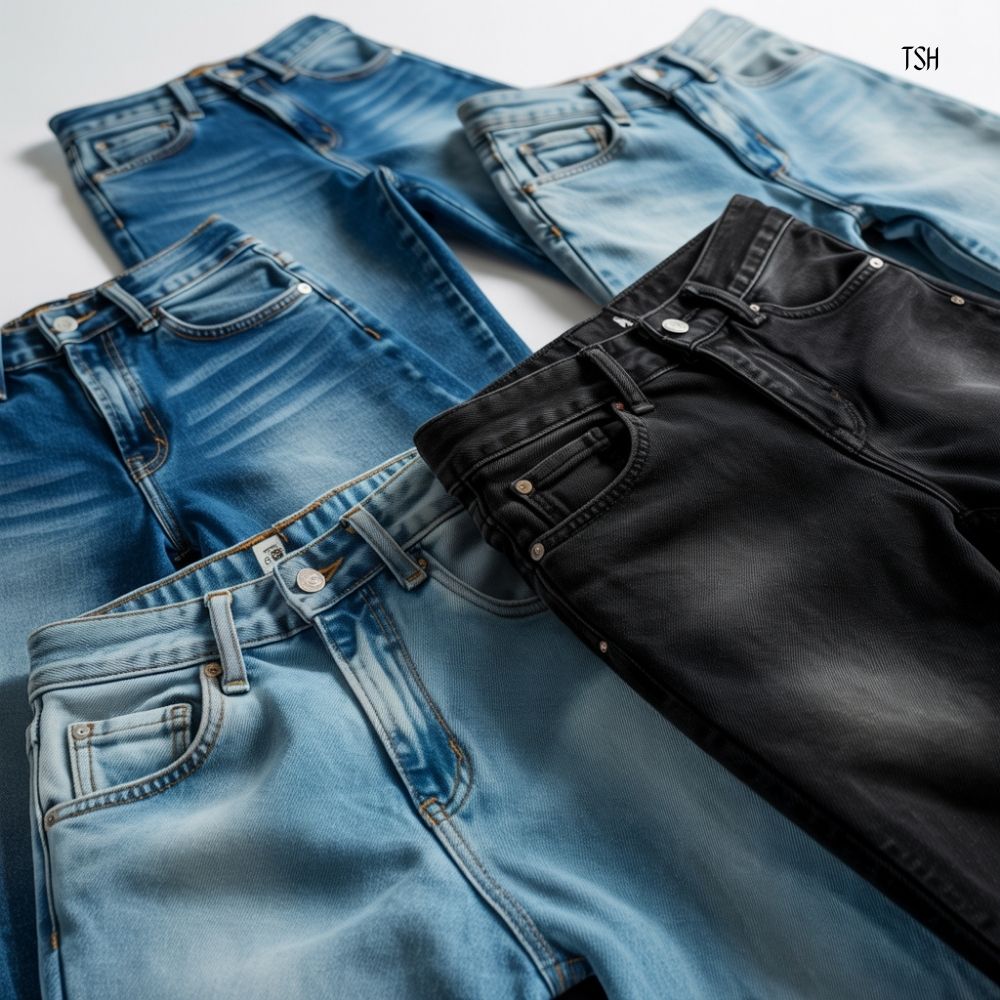
How I Make Basic Jeans Look Expensive Without Shopping
I used to think “expensive jeans” meant one thing, which was spending money I did not have on a pair of denim that promised to change my life and then still somehow felt weird by lunchtime.
After a few rounds of that, plus living in Austin where you can go from “cute coffee outfit” to “sweating through your existence” in about twelve seconds, I finally accepted the truth that most jeans look expensive because they fit on purpose, they sit smoothly, and the whole outfit looks intentional.
So this is my no-shopping method, the one I use when I want my basic jeans to look polished, elevated, and quietly expensive, even if they are the same pair I have worn somany times.
Why Jeans Look “Expensive” in the First Place
The “expensive” look in denim is usually a mix of three things that sound boring, but work like magic together: the jeans fit the body you have today, the fabric sits smoothly without bunching in weird places, and the outfit around the jeans is clean and balanced.
That is why someone can wear budget jeans and look elevated, while someone else wears designer denim and still looks a little off, because the expensive part is the finish, not the receipt.
Also, the moment your jeans look stiff, wrinkled, saggy in the wrong places, or overly distressed, they stop reading as polished and start reading as “I threw this on”.
Step 1: Get the Fit Right, Even If You Do Not Tailor
I am not going to tell you to go tailor every pair of jeans. What I will tell you is that the fastest way to make jeans look expensive is to make them fit like they were chosen on purpose.
which usually means fixing one of these common problems: the waistband gapping, the crotch area pulling, the knees bagging out, or the hem length landing in a weird spot.
If your waistband gaps in the back, the no-shopping fix I use is a simple hair tie trick that tightens the waist without a belt. You loop a hair tie through the buttonhole, then pull the ends around the button like you are making a tiny adjustable waist.
If the length is the issue, hemming is the upgrade that changes everything, and you do not have to be a sewing genius to get a better hem. My favorite low-effort solution is a clean cuff that shows a bit of ankle and stays neat.
If you have wide-leg or straight-leg jeans and the hem is dragging, the expensive fix is to make the hem hit the shoe properly. If you cannot hem, you can choose shoes that give you the right length, and that leads perfectly into the next step.
Step 2: Your Shoes Decide the “Price Point” of Your Jeans
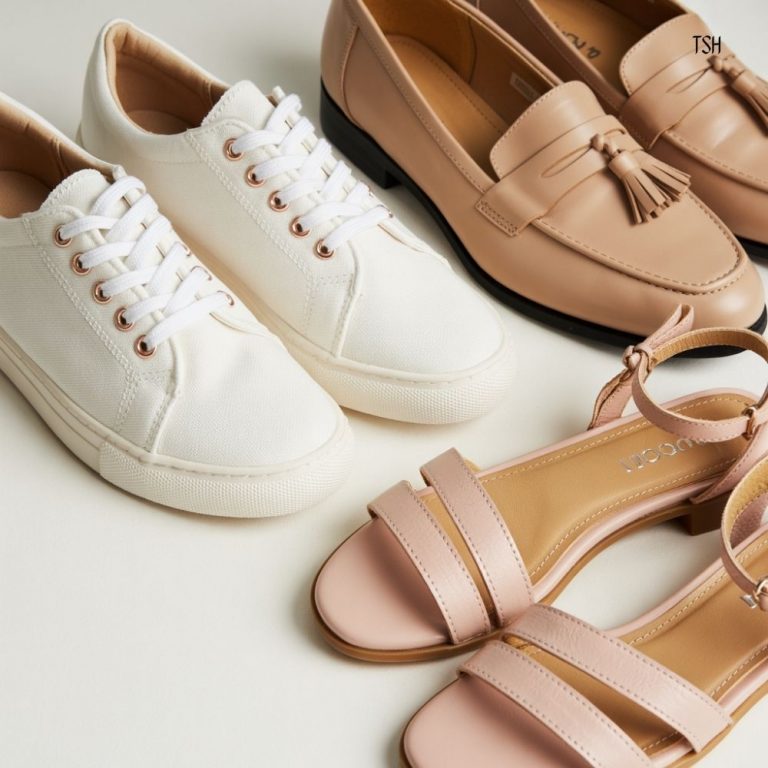
A basic pair of jeans can look instantly more expensive with cleaner, simpler footwear, and it can look instantly cheaper if the shoes look worn out, overly busy, or like they are fighting the vibe.
If I want my jeans to look elevated with zero shopping, I pick the cleanest shoes I already own, and I do a quick wipe-down if they need it. A sleek sneaker, a simple ankle boot, a minimal sandal, or a pointed flat tends to make denim look sharper.
In Austin heat, I lean on simple sandals or clean sneakers most of the year, and I keep it easy: if my shoes are visually quiet, my jeans look more expensive, because the eye is not bouncing around trying to interpret twelve design details at once.
Step 3: Make Your Denim Look Smooth and Fresh Again
Expensive denim almost always looks cared for, and this is where most of the magic lives, because a clean, smooth pair of jeans reads as nicer than a wrinkled pair.
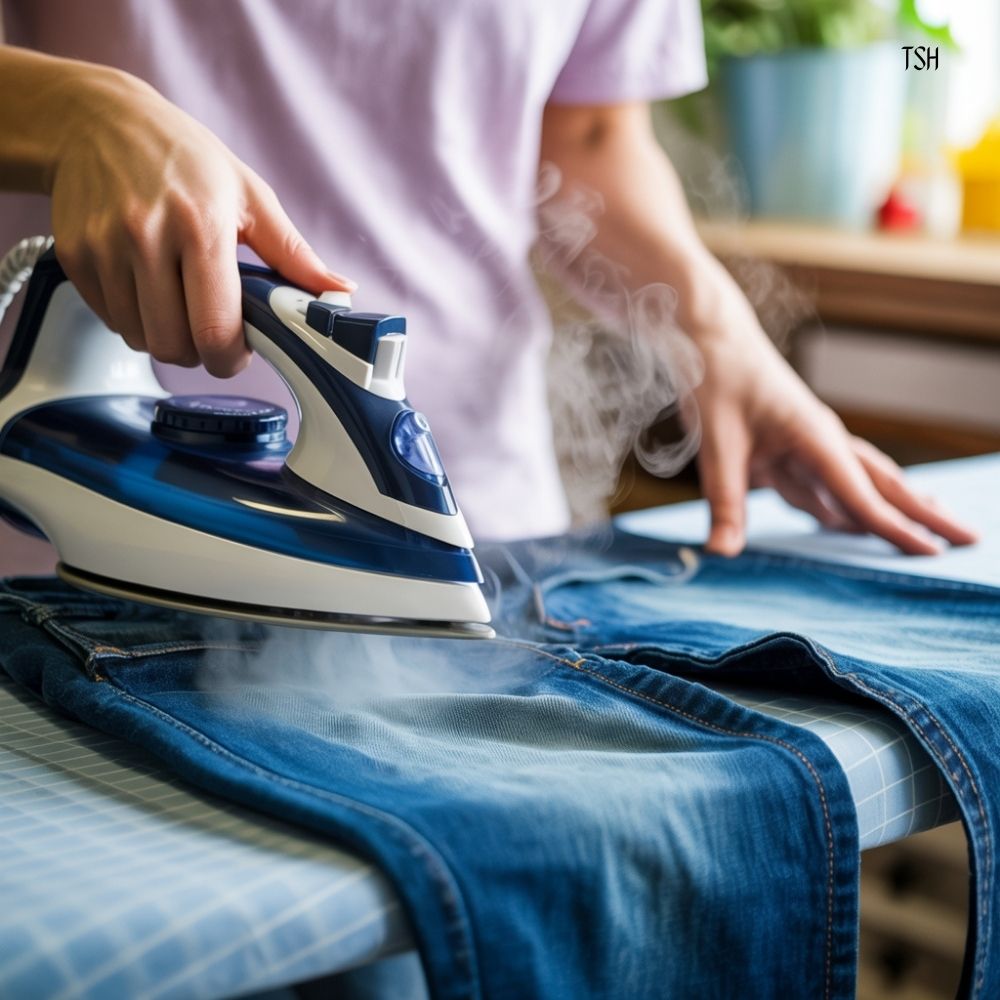
The easiest no-shopping fix is steaming or ironing the jeans, especially around the front pockets, the fly area, and the upper thighs. If you do not want to iron a whole pair, you can iron just the top half and the cuff.
Another big one is dealing with lint, pet hair, and those random fuzzies that love dark denim, because nothing makes jeans look cheaper faster than being covered in lint.
A quick lint roller pass, or even a piece of tape wrapped around your hand if you are truly improvising, makes denim look cleaner in under a minute.
Step 4: Fix the Waistline Situation, Because It’s Doing a Lot
A waistband that looks smooth and secure is one of the biggest differences between “cheap jeans” and “expensive jeans,” even when the jeans are the same pair. If your waistband rolls, gaps, or feels sloppy, the outfit loses structure, and structure is what reads as elevated.
If you are avoiding belts because they can feel bulky, the hair tie trick I mentioned earlier helps, and on days I do wear a belt, I choose the simplest one I already own and keep the buckle minimal.
Also, the moment you have too much bulk at the waistband, like a thick sweater tucked into tight jeans, the outfit can look lumpy, and lumps are not luxurious, so I keep the waistband area as smooth as possible by choosing thinner layers or doing a partial tuck.
Step 7: Wash Your Jeans Like You Actually Want Them to Last
I know this is the least exciting part, but it is the part that saves your jeans from looking tired, faded, and stretched out too fast, which is the main reason denim starts to look less expensive over time.
I wash my jeans less often than I used to, and when I do wash them, I turn them inside out, use cool water, and avoid blasting them with heat in the dryer, because heat can break down the fabric and make the fit lose its shape.
If your jeans tend to bag out at the knees or seat, hanging them to dry helps them keep their structure longer, and it also prevents that weird stretched look that makes denim feel sloppy.
Final Thoughts
The best part about making basic jeans look expensive without shopping is that it gives you back a little control. When you focus on fit, smoothness, and a few simple styling choices, your jeans start to look like a deliberate wardrobe staple.
If you tell me the jeans style you wear most, like skinny, straight, wide-leg, or mom jeans, plus the shoes you reach for the most, I can write you a couple quick outfit formulas that fit your exact closet and still keep that expensive vibe without you buying anything new.