
How I Keep My House Looking Fine With One Tiny Daily Habit
I used to think people who had a consistently clean-looking home were either secretly running a cleaning service out of their living room, or they had a level of discipline I simply did not possess.
Meanwhile, my place would look totally fine at 9 a.m., and then by 6 p.m. it would look like a small group of raccoons had been living there rent-free, because clutter has this sneaky way of appearing during normal life.
What finally helped me was accepting a very important truth: I do not need my house to be spotless, I just need it to look fine, and “fine” is a realistic goal that still makes your brain feel calmer.
So I started doing one tiny daily habit that keeps my space looking presentable without turning my evenings into a cleaning marathon, and it works because it prevents the mess from becoming a bigger mess.
The One Tiny Daily Habit: The “Closing Shift” Reset
My one daily habit is what I call the closing shift reset, because it works like closing a café, except the café is my home and the employee is me, tired, in leggings, and emotionally attached to my couch.
It is a five to seven minute reset that I do at the end of the day, and the goal is not deep cleaning, it is making the house look fine enough that I do not wake up to chaos.
This reset is tiny, but it changes everything, because most mess doesn’t come from one big disaster, it comes from a slow buildup of little things, like cups on tables, mail piles, shoes in random places, and kitchen counters that collect stuff like they are magnetized.
Why This Works Better Than “Cleaning When You Feel Like It”
I used to rely on motivation, and motivation is unreliable, because motivation disappears the second you have a long day, the second your plans change, or the second you sit down and your body decides it would like to become one with the couch.
A tiny reset works because it is not a whole project, so your brain does not resist it as much, and it becomes automatic over time.
It also makes mornings easier, which is the hidden benefit, because waking up to a slightly tidy space makes your brain feel less stressed before you even start your day. It is genuinely hard to have a calm morning when your kitchen looks like a crime scene of snacks and unopened mail.
The Closing Shift Reset (5 to 7 Minutes, No Overthinking)
I do this in the same order every time, because order removes thinking, and thinking is what makes you quit.
Step 1: “Dishes to Sink” and “Trash to Trash”
I grab any cups, plates, or dishes and get them into the sink or dishwasher. I also throw away obvious trash. This step alone makes the room look about 40 percent better instantly, because dishes and trash are visually loud.
If I have the energy, I run the dishwasher, but if I do not, I at least load it, because that is still progress, and progress counts.
Step 2: Clear the Counters Like You’re Resetting Your Brain
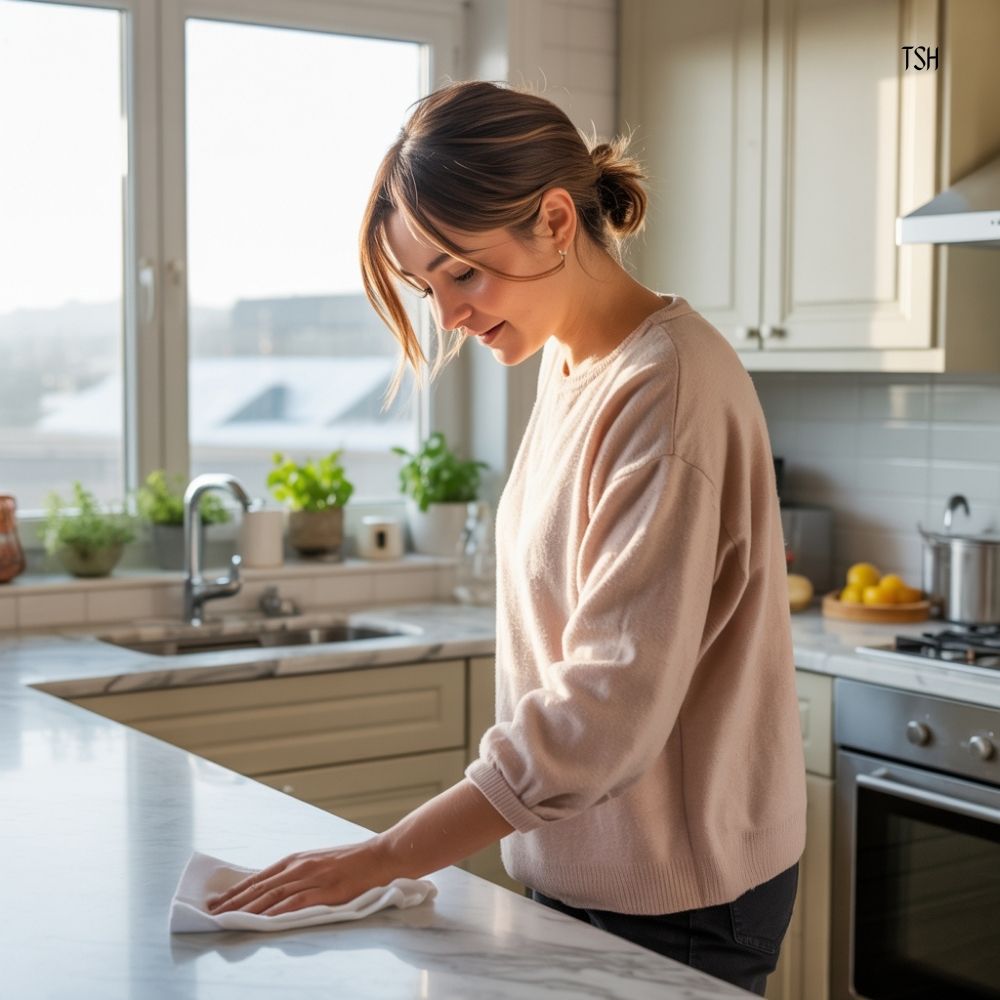
Kitchen counters collect random items like it is their job, so I do a quick sweep and put items back where they belong. If something does not have a home, I put it in a small “decide later” basket, because making decisions at night is not always realistic, and a basket is better than clutter.
This step matters because a clear counter makes your kitchen look instantly cleaner even if you did not scrub anything.
Step 3: The Living Room “Surface Sweep”
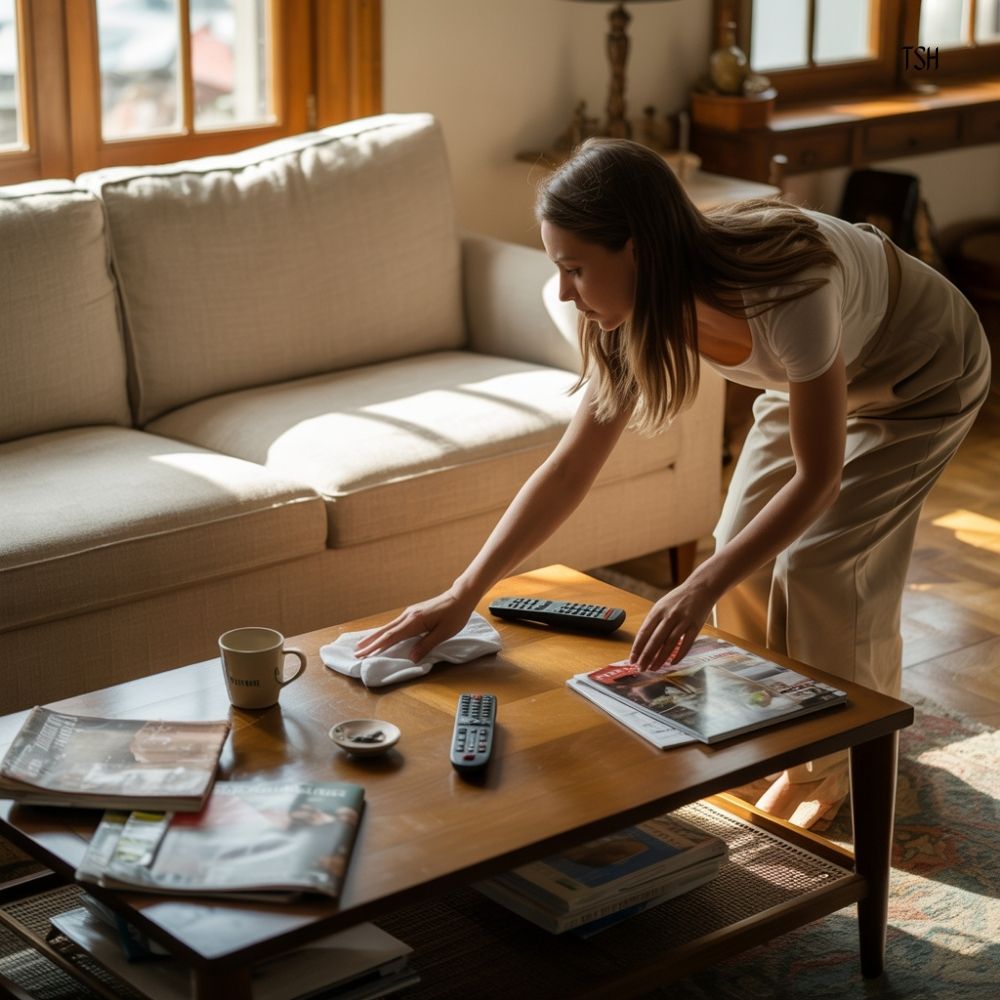
I clear the coffee table, straighten pillows, fold a blanket, and put remotes in one spot. This takes about one minute and makes your space feel calmer, because the living room is where you see the mess the most when you are trying to relax.
I also do a quick floor check and pick up anything obvious, like shoes or a jacket, because nothing makes a place look messy faster than stuff on the floor.
Step 4: Set Up Tomorrow’s You for a Better Morning
This is where the habit turns into a life hack. I set out my water bottle, plug in my phone, and do one tiny prep thing for the morning, like setting out coffee supplies or placing my bag by the door.
This is not required, but it makes mornings smoother, and smooth mornings are the real luxury.
My Favorite Shortcut: The “One Basket Rule”
If you live with other people, or you just have a lot of small items, a basket saves your life. The rule is that anything that does not belong in the room goes into the basket during the reset, and you deal with it later.
This keeps you from stopping the reset to go put one item away in another room and then getting distracted and never finishing.
I keep one basket in the living room and sometimes one in the kitchen, and it makes the reset fast because it is a simple solution for clutter that does not have a home yet.
What I Do on Low-Energy Days
On low-energy days, my closing shift becomes the “bare minimum reset,” and it still makes a difference.
I do dishes to sink, trash to trash, and a quick counter wipe if needed. That is it. I do not mop, I do not reorganize cabinets, and I do not start a decluttering project, because that is how you end up exhausted and annoyed at your own house.
The whole point is to keep the mess from snowballing, and the bare minimum reset still accomplishes that.
Common Mistakes That Make This Harder Than It Needs to Be
The biggest mistake is trying to do too much at once, because then you avoid it entirely. Another mistake is not having a home for the stuff you use daily, because when items do not have a place, they become clutter by default.
If you keep putting the same items in the same random spot, that spot is telling you it needs to become their real home, and you can make your life easier by listening.
Also, do not start cleaning your entire house at 10 p.m. because you suddenly feel inspired. That inspiration will turn into regret, and you will hate the habit. Keep it small and consistent.
Final Thoughts
You do not need a big cleaning routine to keep your house looking fine, you need one tiny daily habit that prevents mess from piling up, and the closing shift reset is that habit for me.
It is quick, realistic, and it works even when you are tired, because it is not about perfection, it is about keeping your space livable and your brain calmer.